


The waitlist is brutal
Families wait 6+ months for a pediatric speech and language therapist, while the most important window for early language starts to close.

Speech-therapist designed games and real life tips for late talkers - try at home tonight, while you wait for therapy

Built by Nina, a UK-registered speech therapist.Helping thousands of families find their words at home.
Nina's professional credentials
 HCPC registered
 RCSLT registered
 NHS-trained
 Hundreds of children in clinic
Why it feels so hard
Families wait 6+ months for a pediatric speech and language therapist, while the most important window for early language starts to close.
Children who cannot communicate what they want get easily overwhelmed, and so do you. SpeechBarn teaches simple functional vocabulary to help reduce the frustration.
Even after initial assessment, most parents go home with vague advice and no daily plan to actually build their child’s language skills.
You don't have to wait, or guess. You can start helping tonight.
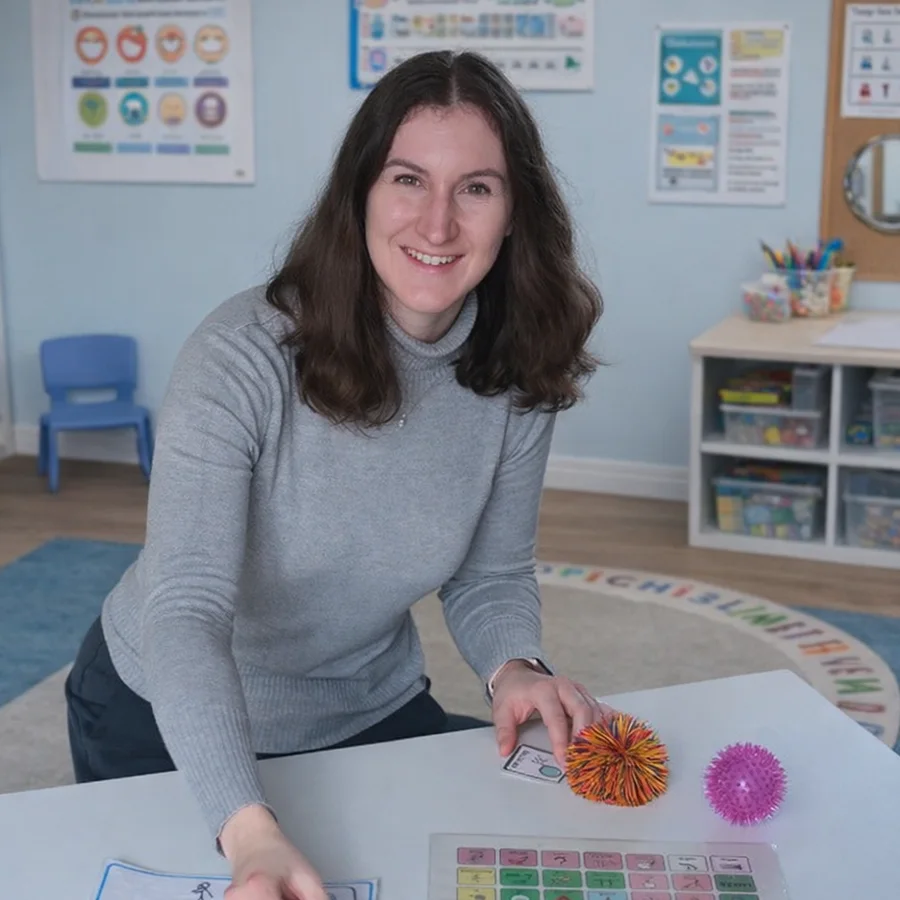
Why SpeechBarn exists
Nina is a UK registered speech and language therapist, and the founder who built every game in SpeechBarn. She had speech and language therapy herself growing up. She trained in the NHS, spent years helping hundreds of children find their words, and watched families wait up to 12 months for therapy while their kids struggled.
She couldn't keep sending parents home with nothing to do in the meantime. So she turned her clinic methods into an app for everyone. Functional words that teach real communication skills and simple parent tips based on research-backed speech and language therapy methods - all this as part of a barnyard game that you can open tonight, not next year.
“I know what it's like to need that support, and I built SpeechBarn so your family doesn't have to wait months to start.”
A calmer way to help at home
A few quick questions build a plan around your child’s level, from early language to sentence level
Your child plays the games specifically designed to teach functional vocabulary and reduce frustration.
Keep practicing the words they learnt in real life situations with tips from a Speech and Language Therapist.
The path ahead
Pointing, gestures and early sounds become intentional ways to connect.
Power words that unlock daily life: “more”, “all done”, “go”.
Joining words into little phrases: “more bubbles”, “big cow”.
Longer phrases to ask, comment and share: “I want more juice”.
Using words on their own to say what they want and need, without the frustration and guessing.
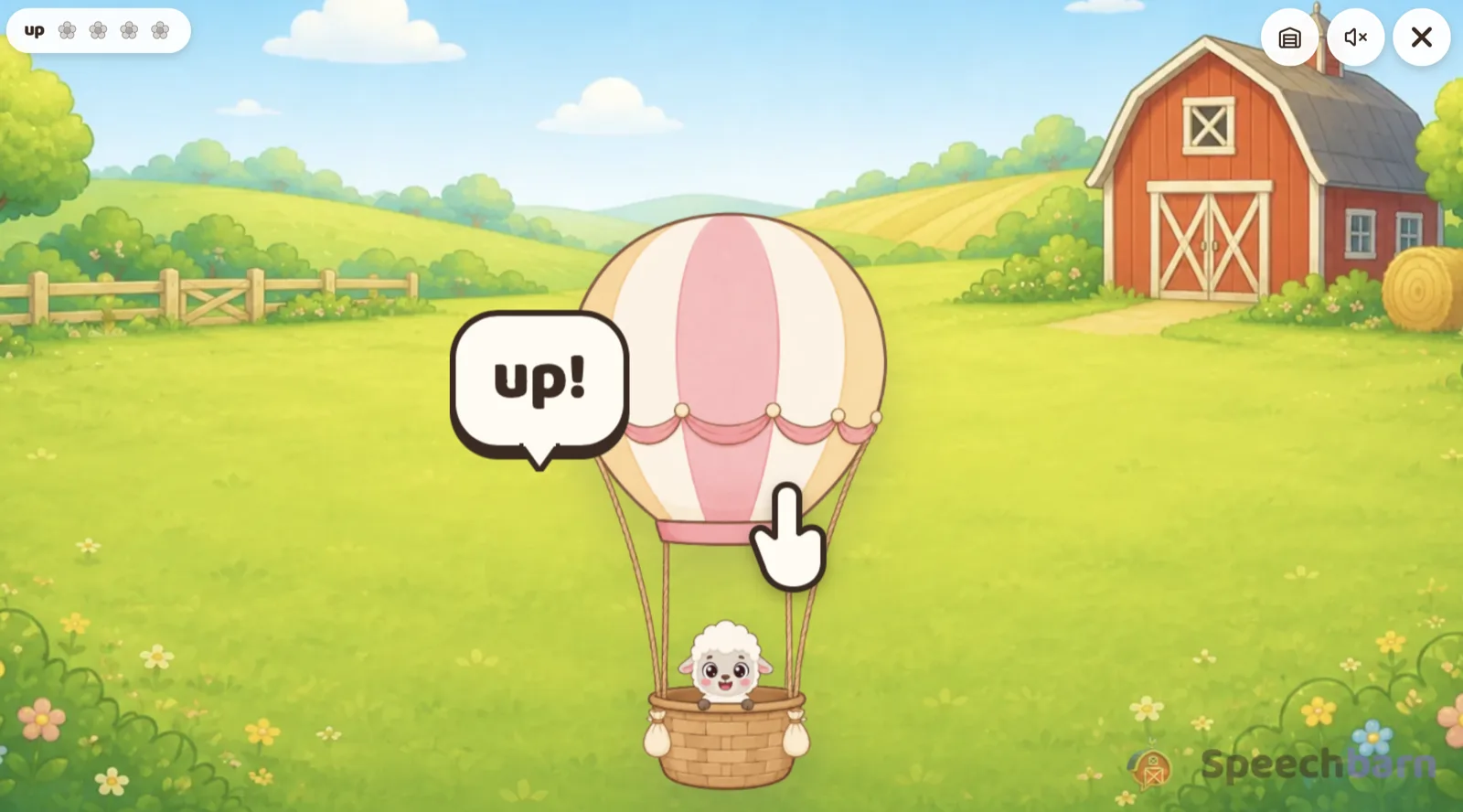
Every game is built on how kids actually learn to talk: taking turns, asking for “more”, and celebrating “all done”. Start free by feeding Pip the piglet and blowing bubbles, then grow from single words into little phrases, one happy win at a time.
SpeechBarn doesn't diagnose or replace a speech and language therapist. It gives your family a kind, structured way to practice while you wait for therapy, or to keep momentum between sessions, whether your child is a late talker, slow to start using words, or working through apraxia or autism-related speech delays.
Get a plan in 2 minutes
Tell us a little about how your child communicates today, and we'll shape a practical at-home practice path around the exact words they're working on.
Build my child's planDid you know?
Children make significantly bigger gains in talking when a parent practises with them.
Roberts & Kaiser, meta-analysis of parent-implemented language intervention, American Journal of Speech-Language Pathology, 2011
That's the whole idea behind SpeechBarn. It doesn't hand your child to a screen. It puts the right words in your hands and shows you exactly what to do, five minutes at a time.
Why it works
Based on the same evidence-informed, word-by-word sequence speech therapists use in clinic
Every game practises one useful word (“more”, “open”, “help”, “go”), the words that get a child what they want, said again and again until they stick.
Nina designed every level around the same word-by-word sequence she uses in her clinic, so you reinforce the right things in the right order.
Short, joyful sessions fit real family life, so practice actually happens, day after day, without the battle.
At the kitchen table, between therapy visits, or while waiting for help, SpeechBarn keeps practice kind, structured, and realistic, so progress keeps happening at home.
Questions parents ask
Yes. Short, playful practice at home is one of the best ways to support a toddler’s speech, especially while you wait for a therapist. SpeechBarn turns therapist-designed exercises into 5-minute barnyard games, so you reinforce the right words in the right order. It complements professional speech and language therapy rather than replacing it.
Late talkers need lots of playful, low-pressure repetition of power words like “more” and “all done”. SpeechBarn builds practice around exactly those first words: your child feeds Pip the piglet while hearing and copying the word, a few minutes a day.
The best games for this age pair a simple action with a target word: feeding an animal (“more”), tidying toys away (“all done”), or popping bubbles. Every SpeechBarn game works this way and was designed by Nina, a UK registered speech and language therapist.
No. SpeechBarn is structured at-home practice designed to complement work with a speech and language therapist, while you wait for therapy or between sessions. It does not diagnose and is not a replacement for professional care.
Answer a few quick questions and build a plan around your child's words. Free to start, no signup.


