Speech Therapy Activities at Home
A parent-friendly guide to simple speech therapy activities at home, with play ideas for preschoolers, toddlers, articulation practice, and short daily routines.
Educational content for parents. SpeechBarn supports at-home practice and does not replace a speech-language pathologist.
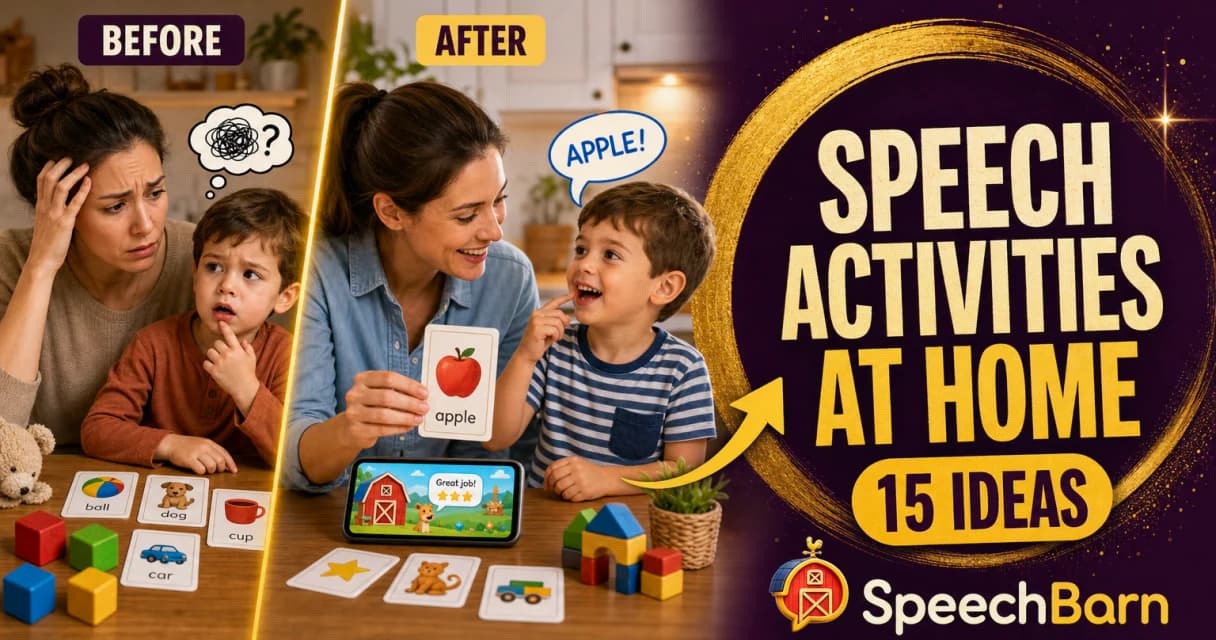
The best speech therapy activities at home are short, specific, and easy to repeat. You do not need a therapy room or a stack of worksheets. You need a tiny target, a playful reason to say it, and a way to stop before your child burns out.
Use these ideas as practice between sessions, while you wait for an appointment, or when you want to help your child build clearer words during normal family life.
Choose one speech target, turn it into a reason to play, and stop before practice starts feeling like a test.
- Five focused minutes usually beats one long practice block.
- Use real routines: snack, books, bath, cleanup, car rides, and pretend play.
- Model the word first, then invite a try. Do not make every turn a demand.
- Track effort, clarity, and independence separately so progress is easier to notice.
A parent script for at-home practice
The words you use matter. A calm script keeps practice playful and gives your child a clear job without turning the moment into correction.
"My turn: sun. Your turn if you want: sun."
"I heard a strong /s/. Let's try it one more time in silly voice."
"That was close. I am going to say it slowly: sss-un."
"Last one, then we are done. Pick the card."
How to choose one target
Pick one thing: a sound, a word shape, a request, or a turn-taking phrase. When parents try to practice every speech goal at once, the child usually hears correction instead of play.
If you are not sure where to start, use the speech sound age checklist or keep the goal broad: more clear requests, more imitation, or more first words.
15 easy activities
- Hide picture cards in a box and say the target word before opening each flap.
- Feed a toy five target words, then let the toy burp or cheer.
- Build a tower and say one word before each block.
- Sort snack pieces by sound: one bite for /p/, one bite for /m/.
- Use bath toys for action words like splash, pour, open, stop, and more.
- Play silly mistakes: say the wrong word and let your child correct you.
- Make a mini obstacle course where each station has one target word.
- Read one page, pause, and wait for a sound, word, or gesture.
- Use car rides for five practice words, then stop.
- Let your child choose a sticker after each attempt, not only after perfect speech.
- Practice minimal pairs with two toys, such as tea/key or sun/shun.
- Use mirror play for lip sounds like /p/, /b/, and /m/.
- Record a short before/after clip once a week to notice progress.
- Turn cleanup into requesting: more, open, help, all done.
- End with a word your child can already say well.
What makes home practice work
Home practice works when it is predictable. Same time, same tiny goal, same playful setup. Five focused minutes beats a 30-minute battle.
You can also use the speech practice timer to protect your child from over-practice and protect yourself from guessing when to stop.
Your own calm is part of the setup too. Children read tension fast, and a rushed or frustrated start usually turns play into a test. If you are arriving at practice wound up, a minute of slow breathing first can help; the free breathing timer at ClearBreaths is a simple way to reset before you pick up the cards.
Where to fit speech practice into the day
Use moments that already happen. The best routine is the one you can repeat without planning a full lesson.
| Routine | What to practice | How to keep it playful |
|---|---|---|
| Snack | Requesting, first words, final sounds | Give tiny portions so there are natural chances to ask for more. |
| Books | Target sounds, action words, sentence expansion | Read one page, pause, and let your child finish a familiar word. |
| Bath | Early words like pop, pour, splash, more | Make toys wait behind a cup until your child communicates. |
| Cleanup | Categories, short phrases, all done | Let each item say a target word before going into the bin. |
| Car ride | Three to five practice words | Use a tiny list and quit after one lap through the words. |
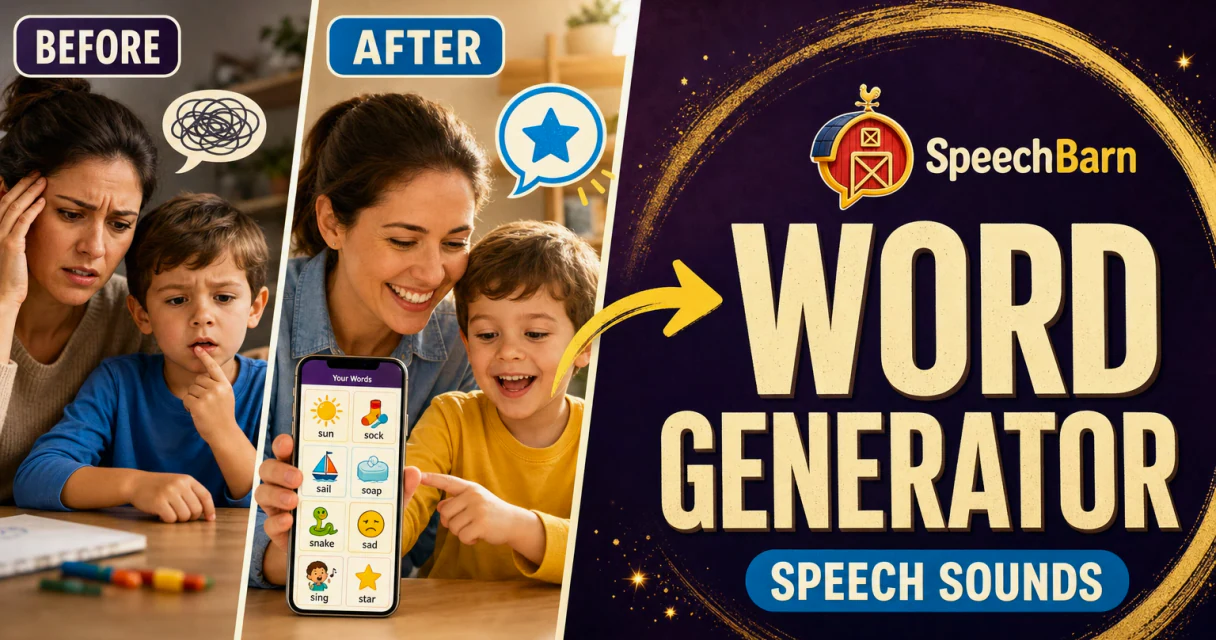
Pick one sound, one word shape, or one useful phrase. If the goal is fuzzy, the practice will feel fuzzy too.
Check speech soundsAim for many light repetitions: feed a toy, build a tower, hide cards, or race cars. Repetition should come from the game.
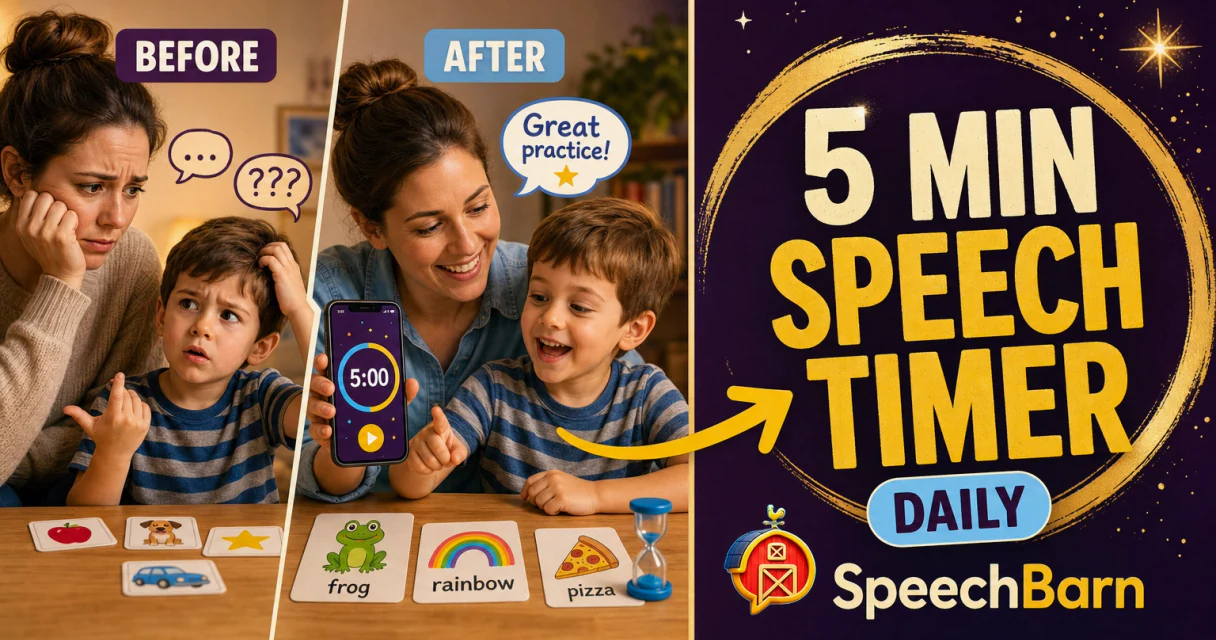
Use a visible finish: five blocks, three cards, one timer. Children stay more willing when practice has a predictable ending.
Use the timerA five-minute session template
- Choose one target sound or word.
- Pick three to six practice words.
- Model first, then invite your child to try.
- Praise effort and clarity separately.
- Stop while your child still wants one more turn.
When home activities are not enough
- If your child is frustrated often, losing words, not understood by familiar adults, or not making progress with simple practice, ask a speech-language pathologist for guidance.
- Bring a short list of words your child says clearly, words that are hard, and what you have already tried at home.
Keep going with SpeechBarn
SpeechBarn turns short parent-led practice into a playful sound-it-out game. Use the free tools below, then build a child speech plan when you want a more structured routine.
SpeechBarn content is educational and is not a diagnosis or a replacement for care from a speech-language pathologist.
Frequently asked questions
How long should speech practice at home be?
For young children, five to ten minutes is often enough. Short, consistent practice is easier to repeat than long sessions.
Can parents do speech therapy activities at home?
Parents can support practice at home, especially for carryover, routines, and playful repetition. A speech-language pathologist should guide diagnosis and treatment goals.
What should I practice first?
Start with one sound, word, or communication routine your child can almost do. If you are unsure, use a checklist and bring notes to an SLP.