Speech Milestones Checklist
A parent-friendly speech milestones checklist from early sounds to preschool language, plus what to track and when to ask for help.
Educational content for parents. SpeechBarn supports at-home practice and does not replace a speech and language therapist.
Speech milestones help parents notice whether communication is moving forward. They include sounds, words, understanding, gestures, play, and social communication.
Milestones are not a pass/fail test, but they can help you decide what to track and when to ask for support.
Speech milestones are useful when they help you notice patterns across understanding, gestures, words, sounds, and social communication.
- Milestones are ranges, not a pass-fail test.
- Look at what your child understands, how they communicate, and how often they are understood.
- Real examples are more useful than a single yes/no answer.
- If you are worried, ask for help. You do not need to prove a delay first.
How to observe milestones during normal life
You do not need to test your child formally. Watch what happens in familiar routines.
"What does my child do when they need help?"
"Can unfamiliar people understand this word?"
"Does my child use gestures, words, or both?"
"What changed over the last three months?"
What milestones include
- Understanding familiar words and routines.
- Using gestures like pointing, waving, and reaching.
- Making sounds and babbling.
- Using first words.
- Combining words.
- Being understood by familiar and unfamiliar people.
Why milestones vary
Children develop at different speeds, and one late skill does not explain the whole child. Look for progress over time and the combination of understanding, gestures, words, and play.
If your instinct says something is off, you can ask for an evaluation even before a milestone chart says "late."
How to use the checklist
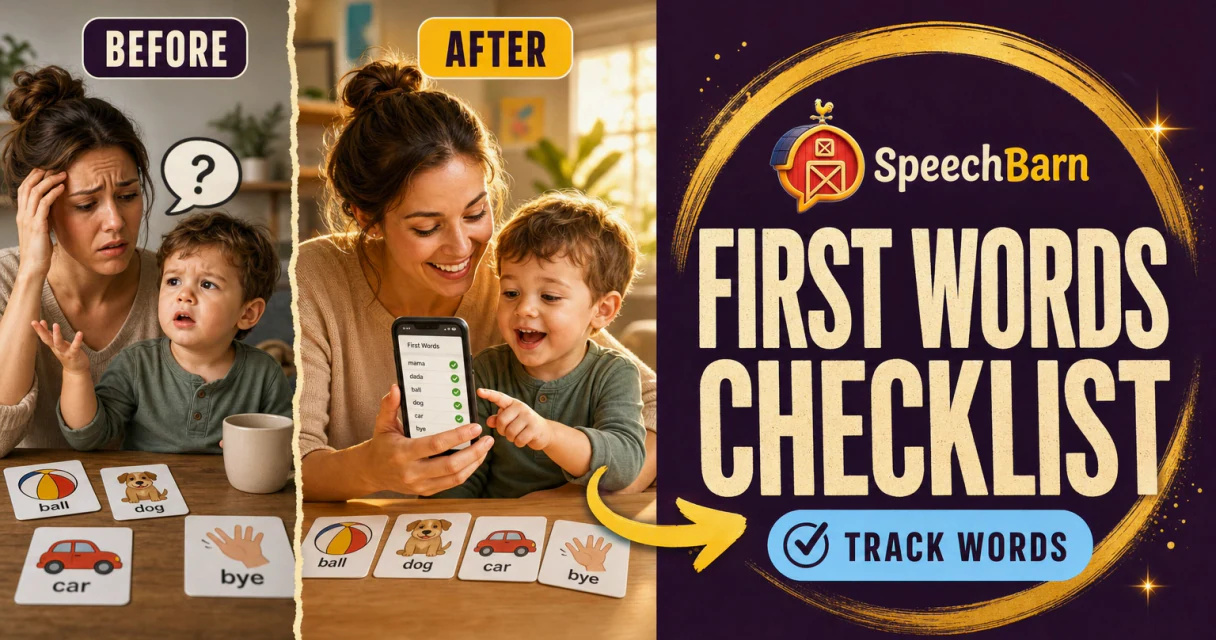
Use the first words checklist to organize what you see by age. Bring the notes to your pediatrician or SLT.
Then choose one home routine from late talker activities so support feels concrete.
Milestone notes worth saving
These notes help a pediatrician, early intervention provider, or SLT see the full picture faster.
| Area | Example to collect | Why it matters |
|---|---|---|
| Understanding | Follows "get shoes" or "give me cup" | Receptive language gives context for talking. |
| Gestures | Points, waves, reaches, shows objects | Gestures are communication and often support words. |
| Words | List of words used independently | Shows vocabulary breadth and function. |
| Speech clarity | Who understands the child? | Connects sounds to real participation. |
| Social use | Starts interactions, takes turns, repairs breakdowns | Shows how communication works in daily life. |
Use an interactive milestone checker to organize what you notice.
Open milestone checkerA useful word list includes people, foods, actions, animals, toys, and routines.
Track wordsOne hard day does not define development. Patterns across weeks are more meaningful.
Milestone notes to track
- New words this month.
- Gestures your child uses.
- Directions your child understands.
- How often your child imitates.
- How frustrated your child gets when misunderstood.
When milestone concerns deserve action
- Talk with a pediatrician, early intervention program, or SLT if your child is not using expected communication skills, loses skills, seems frustrated, or is hard to understand.
- Early support can be useful even when the final answer is reassurance.
Keep going with SpeechBarn
SpeechBarn turns short parent-led practice into a playful sound-it-out game. Use the free tools below, then build a child speech plan when you want a more structured routine.
SpeechBarn content is educational and is not a diagnosis or a replacement for care from a speech and language therapist.
Frequently asked questions
What are red flags for speech milestones?
Possible red flags include loss of skills, few gestures, limited understanding, very few words compared with peers, or high frustration. Ask a professional if you are concerned.
How many words should a 2 year old say?
Many milestone sources expect a growing vocabulary and word combinations around age 2, but exact counts vary. Track progress and ask your pediatrician or SLT if worried.
Are milestone checklists diagnostic?
No. They help organize observations. Diagnosis and treatment planning should come from qualified professionals.