Articulation Practice for Kids
Articulation practice for kids explained: how to choose words, cue sounds, practice in play, and avoid turning speech work into a battle.
Educational content for parents. SpeechBarn supports at-home practice and does not replace a speech-language pathologist.
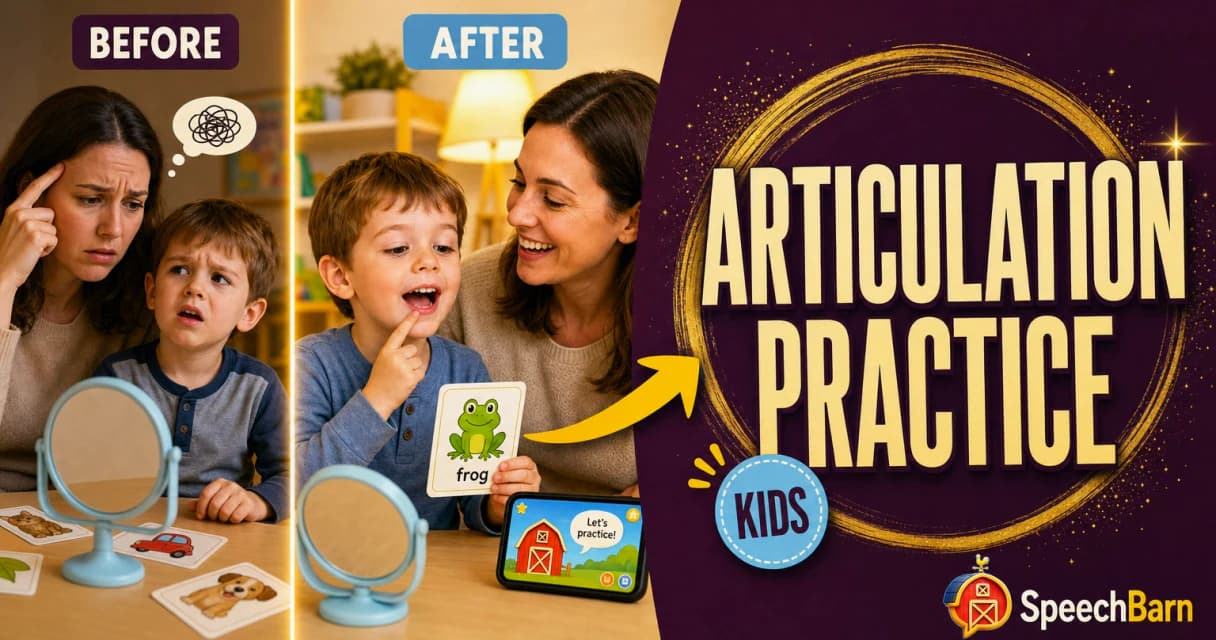
Articulation practice helps a child make a speech sound more clearly and use it in more words. The big mistake is jumping straight from one good sound to full sentences.
Good practice moves in steps: sound, syllable, word, phrase, sentence, conversation. Parents can help by keeping each step small and playful.
Articulation practice works when the target is specific, the cue is simple, and the child gets many successful tries.
- Practice one sound in one word position before mixing everything together.
- Use cues that show the child what to do with lips, tongue, airflow, or voice.
- Move from sound to syllable to word to phrase only when the child is ready.
- Keep score lightly: effort, accuracy, and independence are different skills.
How to cue without nagging
Good articulation cues are short and specific. Long explanations usually make the child work harder than needed.
"Tongue up. Try /t/."
"Lips closed, then pop: /p/."
"Long snake sound: sss."
"I will say it slow: sun. Now your turn."
Start where your child can succeed
If your child can make /s/ by itself but loses it in words, practice short words first. If they cannot make the sound yet, an SLP can help with placement and cues.
Do not correct every word all day. Choose a practice window so home still feels like home.
Useful parent cues
- Visual cue: show the mouth shape or point to lips/tongue position.
- Auditory cue: stretch the sound so your child hears it.
- Tactile cue: tap a finger for each sound in a word.
- Choice cue: ask which one sounds right, sun or shun?
- Confidence cue: end with a word your child can say clearly.
Practice in the real world
Once a sound is easier in practice, move it into real routines: snack names, toy names, family names, or favorite books.
Use small generated lists, not giant worksheets. Repetition matters, but so does motivation.
Articulation practice ladder
Use the easiest level that gives your child success. Moving too fast can make speech sound worse, not better.
| Level | Example | Ready to move on when... |
|---|---|---|
| Sound | /s/ by itself | The sound is clear with a simple cue. |
| Syllable | see, soo, sah | The child can keep the sound clear with a vowel. |
| Word | sun, soup, sock | The sound is clear in several words. |
| Phrase | my sun, big sock | The sound stays clear with extra words. |
| Conversation | Using the word during play | The child notices and repairs the sound with less help. |
Use a small word list for the sound and word position you are practicing.
Generate wordsMirrors help with lip and jaw placement, but they are not needed for every sound or every child.
If a word is too hard, step down to an easier syllable or choose a different word.
Articulation practice ladder
- Sound by itself.
- Sound with a vowel.
- Short words.
- Phrases.
- Sentences.
- Natural conversation.
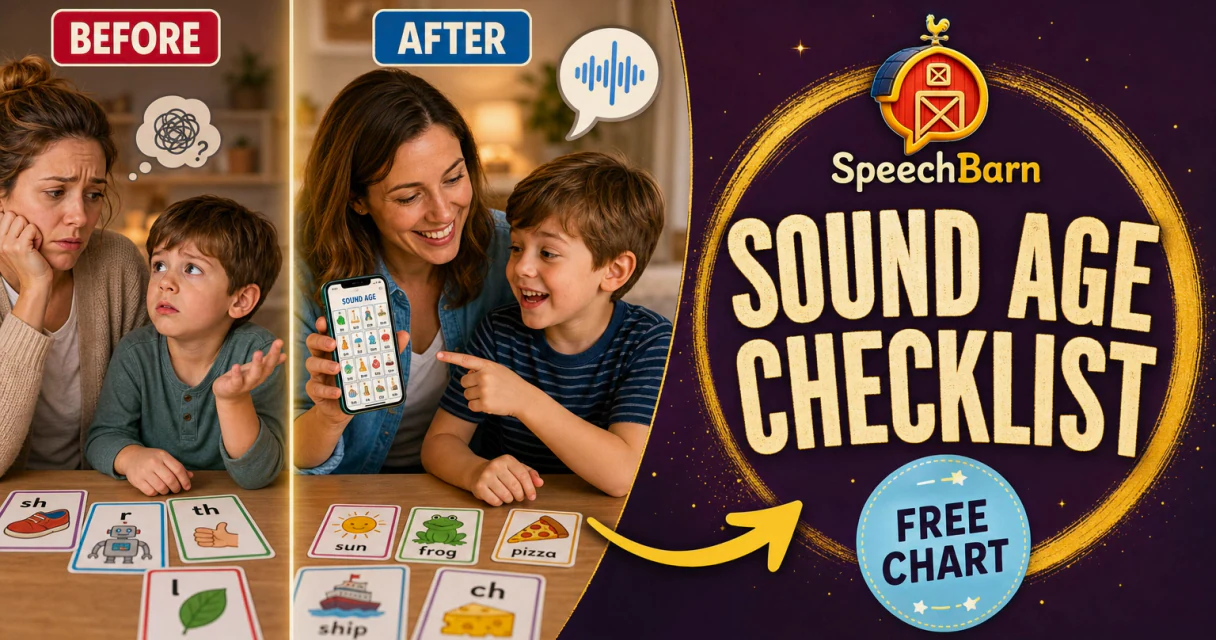
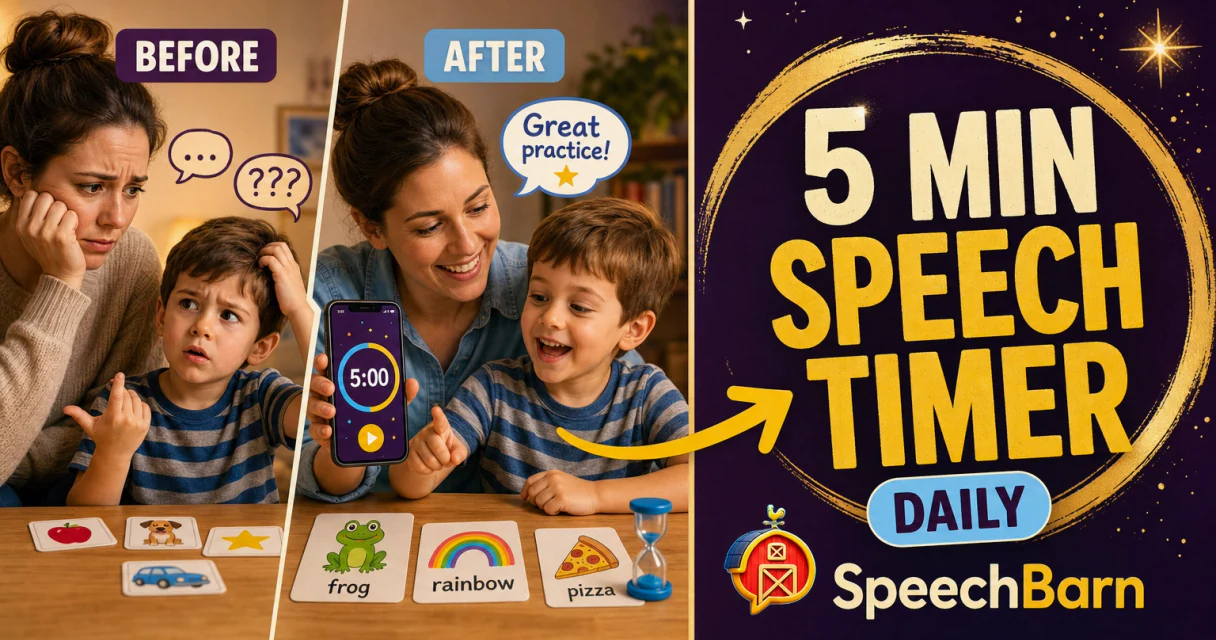
When articulation practice needs guidance
- If your child cannot make the sound even with models, has many unclear sounds, or gets upset quickly, an SLP can choose a better starting point.
- Some speech sound patterns need a different approach than simple word repetition.
Keep going with SpeechBarn
SpeechBarn turns short parent-led practice into a playful sound-it-out game. Use the free tools below, then build a child speech plan when you want a more structured routine.
SpeechBarn content is educational and is not a diagnosis or a replacement for care from a speech-language pathologist.
Frequently asked questions
How often should kids practice articulation?
Short daily practice is often easier than one long session. Five minutes can be enough for a young child.
Should I correct every speech mistake?
No. Pick a practice time and target. Constant correction can reduce confidence and communication.
What words should I practice?
Choose words with the target sound that your child understands and can use. Start short and build gradually.