Minimal Pairs for Speech Therapy
Minimal pairs explained for parents, with examples, practice tips, and a free minimal pairs generator for speech sound contrasts.
Educational content for parents. SpeechBarn supports at-home practice and does not replace a speech-language pathologist.
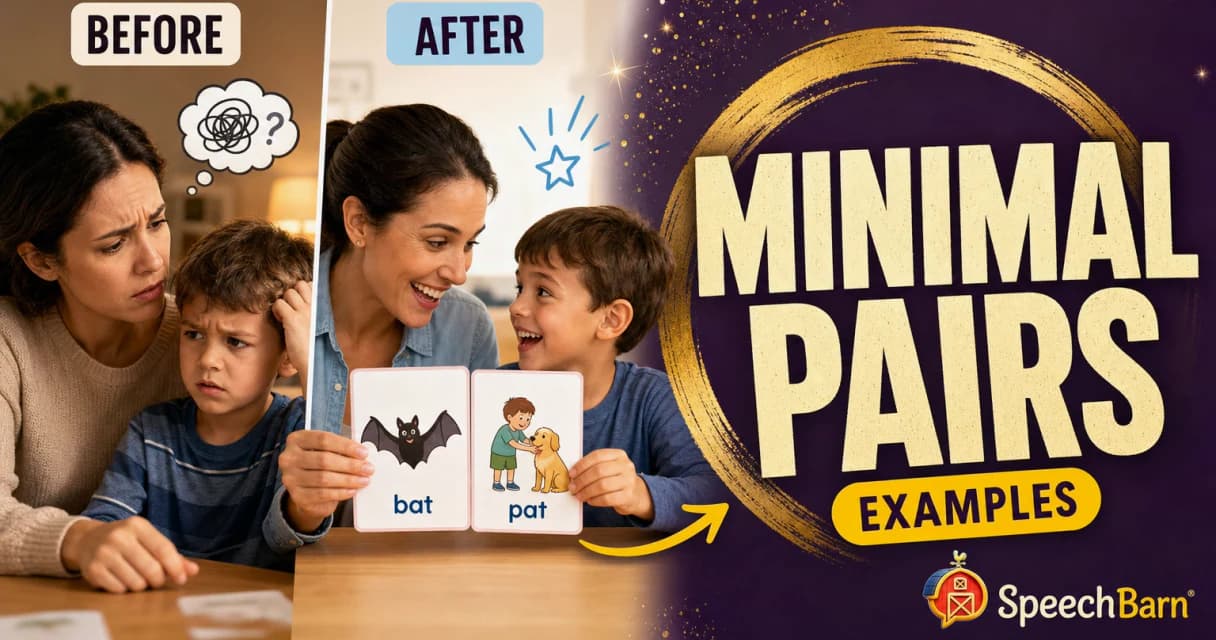
Minimal pairs are two words that differ by one sound, like tea and key or sun and shun. In speech therapy, they help a child notice that a small sound change can change the meaning.
Parents can use minimal pairs at home when an SLP has identified the right contrast. The trick is to keep it playful and meaningful, not to drill random lists forever.
Minimal pairs are word pairs that differ by one sound. They help a child hear that sound changes can change meaning.
- Minimal pairs work best when the child understands the two words are different.
- Use two pictures or objects so the contrast is concrete.
- Keep pairs meaningful: tea/key, coat/goat, sun/fun, ship/sip, or two words your child actually knows.
- Practice listening first, then saying. Do not rush straight to correction.
A minimal-pairs practice script
The adult's job is to make the sound contrast visible and useful. The child should see what happened when the wrong word was understood.
"You said tea, so I picked tea. Did you want key?"
"Listen: coat... goat. They are different words."
"Point to sun. Now point to fun."
"Your turn: sip. Now ship."
What minimal pairs teach
If a child says tea for key, they may need to learn that /t/ and /k/ are different sounds that change meaning. Minimal pairs make that difference obvious.
The goal is not just better pronunciation. The goal is better sound contrast, listening, and meaning.
Common minimal pair contrasts
- Fronting: tea/key, do/go, tar/car.
- Stopping: tea/see, do/zoo, pan/fan.
- Final consonant deletion: bow/boat, bee/beep, cow/couch.
- Gliding: wake/rake, wed/red, yight/light.
- Cluster reduction: pay/play, top/stop, cue/crew.
How to practice without pressure
Use two picture cards. Say one word and let your child hand you the matching card. Then switch roles. If they pick the wrong card, make it silly and model again.
When production practice starts, keep attempts low and success high. The minimal pairs generator can give you a small set instead of an overwhelming list.
Minimal pair examples by goal
Choose pairs that match the pattern your child is working on. If you are not sure, use these as examples to discuss with an SLP.
| Pattern | Example pairs | How to practice |
|---|---|---|
| Fronting | key/tea, car/tar, go/doe | Use two pictures and make the wrong choice gently funny. |
| Stopping | sun/tun, fish/pish, zoo/do | Start with listening: "Which one did I say?" |
| Final consonants | bow/boat, bee/beep, sigh/side | Make the final sound change the object or action. |
| Cluster reduction | pane/plane, top/stop, cool/school | Slow the word down and tap each sound part. |
| Voicing | pig/big, cap/gap, fan/van | Use pairs your child already understands. |
Do not print 100 pairs. Use three to five pairs and repeat them in a game.
Generate pairsHave your child point to the word you say. If they cannot hear the difference yet, speech practice will be harder.
If your child asks for "tea" and means "key," hand them the tea picture first, then model the repair.
Minimal pairs session checklist
- Choose one contrast only.
- Use picture support or real objects.
- Practice listening before production.
- Keep the set small: three to five pairs.
- Stop before your child becomes frustrated.
When minimal pairs need SLP guidance
- Minimal pairs are powerful, but choosing the wrong contrast can waste practice time. Ask an SLP if your child has many sound patterns or gets frustrated quickly.
- If your child cannot hear the difference between the two words, spend more time on listening games before production practice.
Keep going with SpeechBarn
SpeechBarn turns short parent-led practice into a playful sound-it-out game. Use the free tools below, then build a child speech plan when you want a more structured routine.
SpeechBarn content is educational and is not a diagnosis or a replacement for care from a speech-language pathologist.
Frequently asked questions
What is a minimal pair?
A minimal pair is two words that differ by one sound, such as key and tea. The sound difference changes the meaning.
Are minimal pairs good for every speech sound?
They are useful for some sound patterns, especially when a child substitutes one sound for another. An SLP can choose the right contrast.
How many minimal pairs should I practice?
Start with three to five pairs. Small sets are easier for children to hear, remember, and use correctly.